.gif)

City to receive funding for project using artificial intelligence to improve service delivery to the population
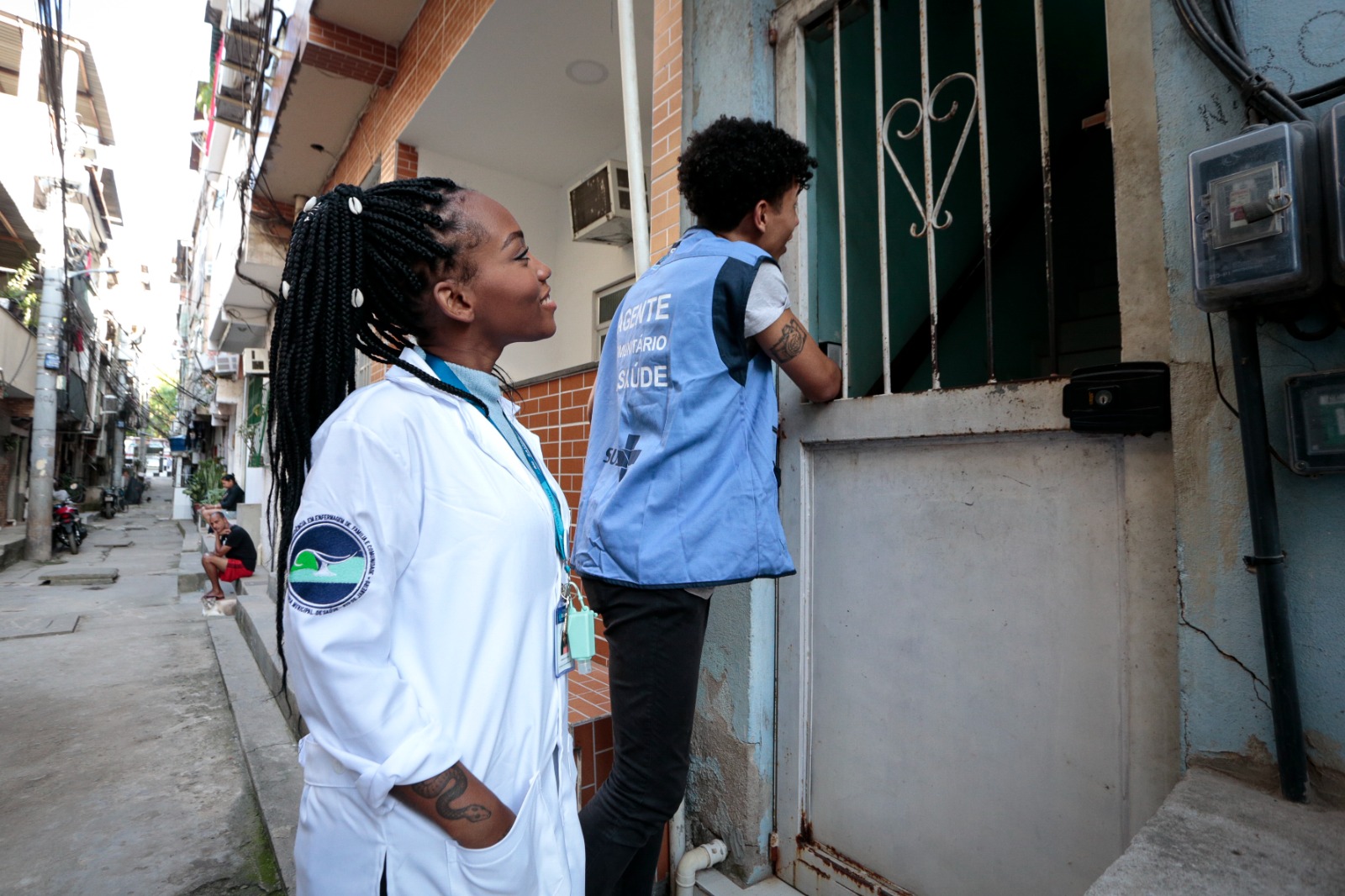
The City of Rio de Janeiro is one of the 24 winners of the 2025-2026 Bloomberg Philanthropies Mayors Challenge—a global competition that recognizes cities with the best innovative ideas to strengthen essential services. Rio was awarded for its proposal to use technology to combat multidimensional vulnerability through a digital "active search" approach.
The project, developed by IplanRio in partnership with the Municipal Secretariats of Social Assistance, Education, and Health, integrates a robust database with an Artificial Intelligence system to proactively anticipate and offer the services each citizen needs. By cross-referencing information on what a citizen has already accessed and what they still need to access with the City's obligations, the AI identifies risks and prioritizes those most in need of support.
During the testing phase in the second half of 2025, more than 20,000 people received messages via WhatsApp. The initiative increased school attendance by 10% in the poorest neighborhoods among students with recurring absences. Among families with outdated Bolsa Família registrations, 10% regularized their status after receiving a reminder—five times more than in the group that received no contact.
The project also began functioning as a "digital stethoscope," capturing the population's needs in real time. The requests received by the chatbot are classified by the AI and forwarded to the responsible departments. In one case, intervention by the Department of Education increased the attendance of a student with ASD from 60% to 77% in just two weeks.
Over the next two years, in partnership with Bloomberg Philanthropies, the focus will be on monitoring 140,000 families in the Pequenos Cariocas Program—pregnant women and children up to six years old with a per capita income of up to 218 reais—with the goal of gradually expanding the model to other vulnerable groups and connecting them in an integrated way to public policies.
The goal is to ensure active monitoring and integrated service delivery for this priority group and, gradually and structurally, expand the model to other vulnerable groups, progressively connecting them to the public policies they need.
By cross-referencing health and social assistance data, it is possible to identify and connect citizens with specific needs to the appropriate public services, ensuring that aid reaches those who need it most with greater agility and automatically, improving municipal management.
The city will receive $1 million from Bloomberg Philanthropies, as well as expert guidance and resources to form a team dedicated to scaling the initiative. Additionally, the Rio City Hall will gain global consulting to refine the project's algorithms and methodology, in collaboration with international experts. The goal is to use technology responsibly to advance toward a more proactive government model capable of anticipating demands and better serving those in need.
"The city of Rio is very happy to receive the Mayors Challenge award, earning the support of Bloomberg Philanthropies. With this support, it will be possible to implement an innovative project that combines artificial intelligence with human care to bring City services to those who need them most, identifying needs and facilitating access to essential services," said Rio Mayor Eduardo Paes. "This recognition shows that Rio is on the right track. We are now an international reference in innovation and technology at the service of people. Our proposal is born from an attentive look at the needs of the most vulnerable population, with the goal of using technology to leave no one behind, investing in a proactive government."
With the support of Bloomberg Philanthropies, the project can be implemented on a large scale, combining artificial intelligence with the technical expertise of City professionals. The proposal is for services such as vaccination and public education to no longer depend exclusively on families navigating bureaucracy, but instead reach them more quickly and efficiently.
"Rio won because it understood that technology only makes sense when it serves people. The recognition from Bloomberg Philanthropies validates Rio as a global reference in GovTech. With this award, IplanRio helps the city take a giant step toward reducing multidimensional vulnerability. We will use innovation to anticipate needs and ensure that no Carioca is left behind in the digital age," said João Carabetta, president of IplanRio.
The 24 winners were: As-Salt (Jordan); Barcelona (Spain); Beira (Mozambique); Belfast (United Kingdom); Benin City (Nigeria); Boise (United States); Budapest (Hungary); Cape Town (South Africa); Cartagena (Colombia); Fez (Morocco); Fukuoka (Japan); Ghaziabad (India); Ghent (Belgium); Kanifing (Gambia); Lafayette (United States); Medellín (Colombia); Netanya (Israel); Pasig (Philippines); Rio de Janeiro (Brazil); South Bend (United States); Surabaya (Indonesia); Toronto (Canada); Turku (Finland); Visakhapatnam (India).
According to the organization, together, the approaches of the winning cities form a 21st-century governance model emerging within city halls: actions focused on problems that other actors—state, national, or private—have left unsolved; systems created to identify risks early and act before crises occur; teams structured to work in an integrated manner across agencies and sectors, seeking concrete results; public policies developed in partnership with residents; municipal public procurement oriented to shape markets—from local food supply to cleaner construction materials—for the benefit of the public interest; and the use of digital technology and artificial intelligence combined with professional judgment to improve the daily experience and outcomes.
To learn more about the 24 winning cities, visit: mayorschallenge.bloomberg.org.


